Limited Edition Blu-rays Explained: Are They Really Limited?
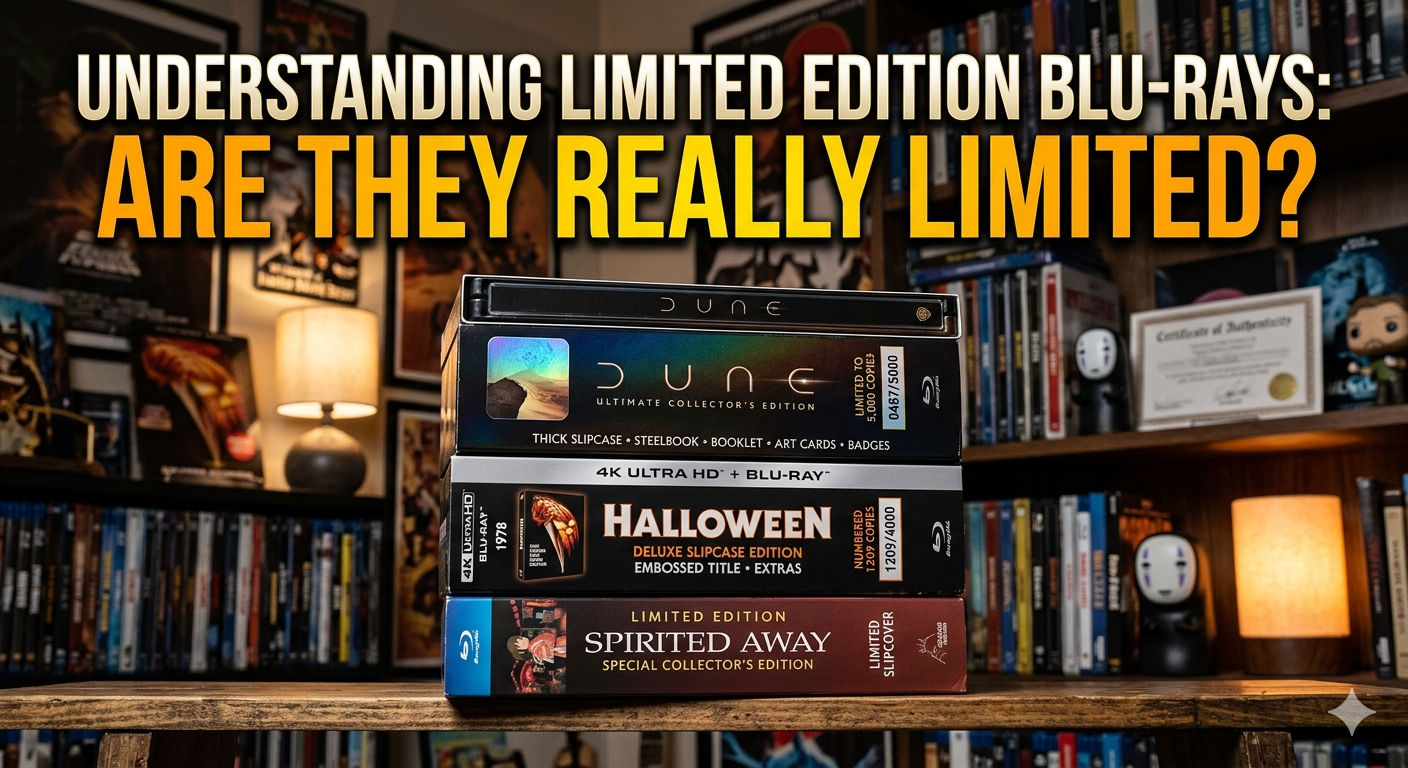
Limited Edition Blu-rays Explained: Are They Really Limited?
If you collect boutique Blu-rays or 4K UHD discs, you’ve probably seen the phrase “Limited Edition” printed on the packaging. For collectors, those two words can trigger a rush to preorder before the title sells out.
For me it makes me wonder is the release truly a one-time print run? Will the movie come back in a standard edition later? And how can you tell whether a steelbook or special packaging will eventually get a regular release?
Understanding how limited editions work can help collectors avoid overpaying on the resale market and decide when to buy.
What “Limited Edition” Usually Means
In most cases, limited edition refers to a specific packaging run rather than the movie itself.
Boutique labels such as Arrow Video, Criterion Collection, Shout! Factory, and Vinegar Syndrome often produce collector versions that include:
Slipcovers or rigid box packaging
Booklets or essays
Posters or art cards
Extra discs with bonus features
Newly commissioned artwork
These editions are typically produced in a single print run. Once the stock sells out, the special packaging disappears, even if the film itself continues to be available.
For collectors, this means the limited edition is mostly about collectible extras, not the availability of the movie itself.
When a Release Is Truly One-and-Done
There are situations where a release really is one print run and gone forever.
Small Boutique Labels
Very small distributors sometimes cannot afford additional pressings. Labels like Severin Films or Vinegar Syndrome occasionally produce fixed runs (for example 2,000–5,000 units) and move on to the next title.
If demand was underestimated, the release may never return.
Limited Licensing Agreements
Licensing deals with studios often last 3–7 years.
A boutique label might license a film from a major studio like Warner Bros. or Paramount Pictures. If the agreement expires, the label can no longer manufacture new copies.
This is why some discs suddenly become “out of print.”
Numbered Limited Editions
Some releases clearly state the exact run size:
“Limited to 3,000 copies”
“Limited to 6,000 units”
“First pressing only”
Labels like Vinegar Syndrome frequently number slipcovers or packaging this way. Once that batch sells out, the packaging is gone permanently.
When Limited Editions Get Standard Releases Later
In many cases, the movie itself is not limited at all.
After the special edition sells out, the label often releases a standard edition with simpler packaging.
This is common with companies like:
Arrow Video
Shout! Factory
Criterion Collection
The difference between versions usually looks like this:
Collectors are therefore paying for presentation and extras, not exclusive access to the movie.
Limited Editions That Became Highly Valuable
One reason collectors pay attention to limited print runs is that some releases dramatically increase in value once they go out of print.
When a boutique label produces a deluxe set with a small print run, the secondary market can push prices far beyond the original retail cost.
Here are a few well-known examples.
Gamera: The Complete Collection
Released by Arrow Video, this massive kaiju box set included:
Eight films
A hardcover book
Extensive bonus features
Original price: about $130–$150
Resale value: often $200+ after selling out
Large deluxe sets like this often sell out quickly and become collector items.
Shawscope Volume One
Another release from Arrow Video, this martial-arts collection featuring Shaw Brothers films quickly gained attention from collectors.
Original price: about $120
Resale prices: frequently $250+ after going out of print
Because the box set included exclusive packaging and a book, collectors drove up resale prices once it disappeared from retailers.
Female Prisoner Scorpion Collection
This cult Japanese film set also saw a significant rise in value once the limited edition sold out.
Original retail price: about $60–$70
Resale prices: often $150+
Again, the collector packaging, not the film itself, was the main driver of the increased value.
Movies Where the 4K Was Initially Steelbook-Only
Another confusing situation for collectors is when a movie receives a 4K release primarily as a steelbook, with no widely distributed standard plastic case edition at launch.
Retailers like Best Buy and Amazon often sell exclusive steelbook versions of films.
In some cases, the steelbook is the only way to obtain the 4K disc in a region, at least initially.
Why Studios Sometimes Do Steelbook-Only Releases
Studios experiment with steelbook-only releases for several reasons:
Retail exclusives
Retailers like Best Buy often negotiate exclusive editions to drive store traffic.
Higher margins
Steelbooks typically sell for more than standard cases.
How Long After a Limited Edition Does a Standard Edition Release?
When a boutique label releases a limited edition Blu-ray or 4K, the standard edition usually follows once the collector packaging sells out. The wait time can vary, but there are some common industry patterns.
Typical Time Frame
Most standard editions appear 6 to 18 months after the limited edition release.
This allows the label to:
Sell through the premium collector version first
Avoid undercutting the value of the limited packaging
Gauge long-term demand for the title
If the limited edition sells very quickly, the standard version may arrive sooner.
Examples From Boutique Labels
Arrow Video
Arrow frequently follows limited box sets with standard releases about 9–12 months later.
Examples include:
Donnie Darko (4K)
The Good, the Bad and the Ugly (4K)
Both films launched with collector packaging before receiving standard editions later.
Second Sight Films
Second Sight tends to wait 12–18 months before releasing standard versions of its collector editions.
For example:
The Witch
Drive
These films initially appeared as deluxe collector boxes before standard editions were issued.
Shout! Factory
Shout! Factory sometimes releases standard versions 6–12 months later, particularly if the limited slipcover sells out quickly.
How to Predict if a Standard Edition Is Coming
Collectors often wonder whether they should buy the limited edition or wait.
Here are a few clues.
Look at the Label’s History
Some labels almost always release standard editions later.
For example Arrow Video often follows limited box sets with standard releases
Knowing the label helps predict what will happen.
Read the Packaging Language
Certain phrases reveal a lot:
“Limited Edition Packaging”
→ usually means a standard edition will follow.
“Limited to 3,000 copies”
→ may never return.
“Collector’s Edition”
→ often reprinted later.
Compare the Disc Contents
If the limited edition uses the same discs as a standard version would, a cheaper release is likely coming later.
But if the set contains extra discs or exclusive features, the limited edition may remain unique.
Why Studios Use Limited Editions
Limited runs help reduce financial risk.
Producing Blu-ray or 4K discs involves:
Film restoration and mastering
Authoring the disc
Manufacturing and replication
Packaging production
Distribution costs
A limited edition allows a company to test demand without committing to tens of thousands of units.
If the release sells well, a cheaper standard version can follow.
The Collector’s Strategy
For collectors, the rule is simple:
Buy early if the packaging matters to you.
But if you only care about owning the movie itself, it is often safe to wait for a standard edition — especially with major boutique labels.
Limited editions may disappear, but the film itself frequently returns in a more affordable form.
Related Posts