How Classic Films Are Remastered for 4K Ultra HD: The Process Behind Restoring Movies Like Ben-Hur
How Classic Films Are Remastered for 4K Ultra HD
The Process Behind Restoring Movies Like Ben-Hur
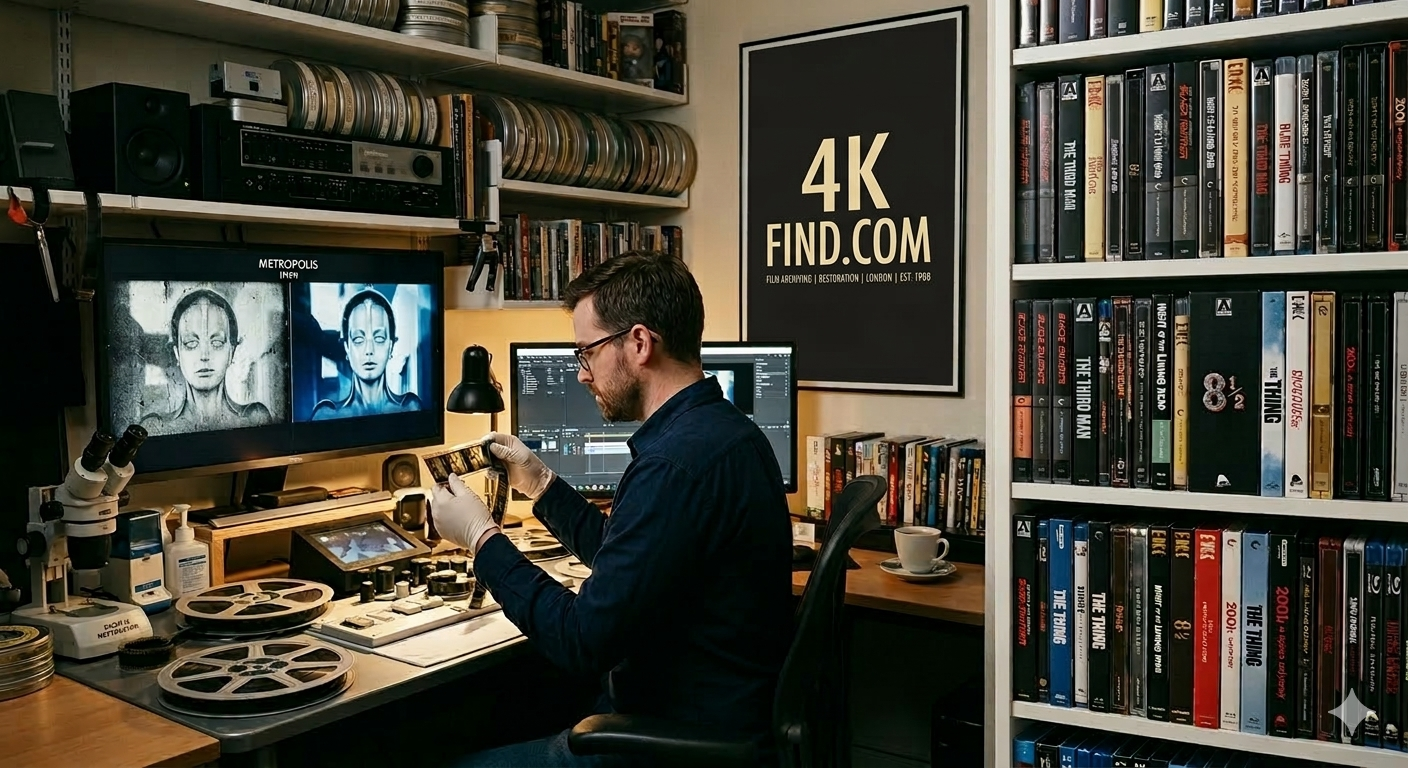
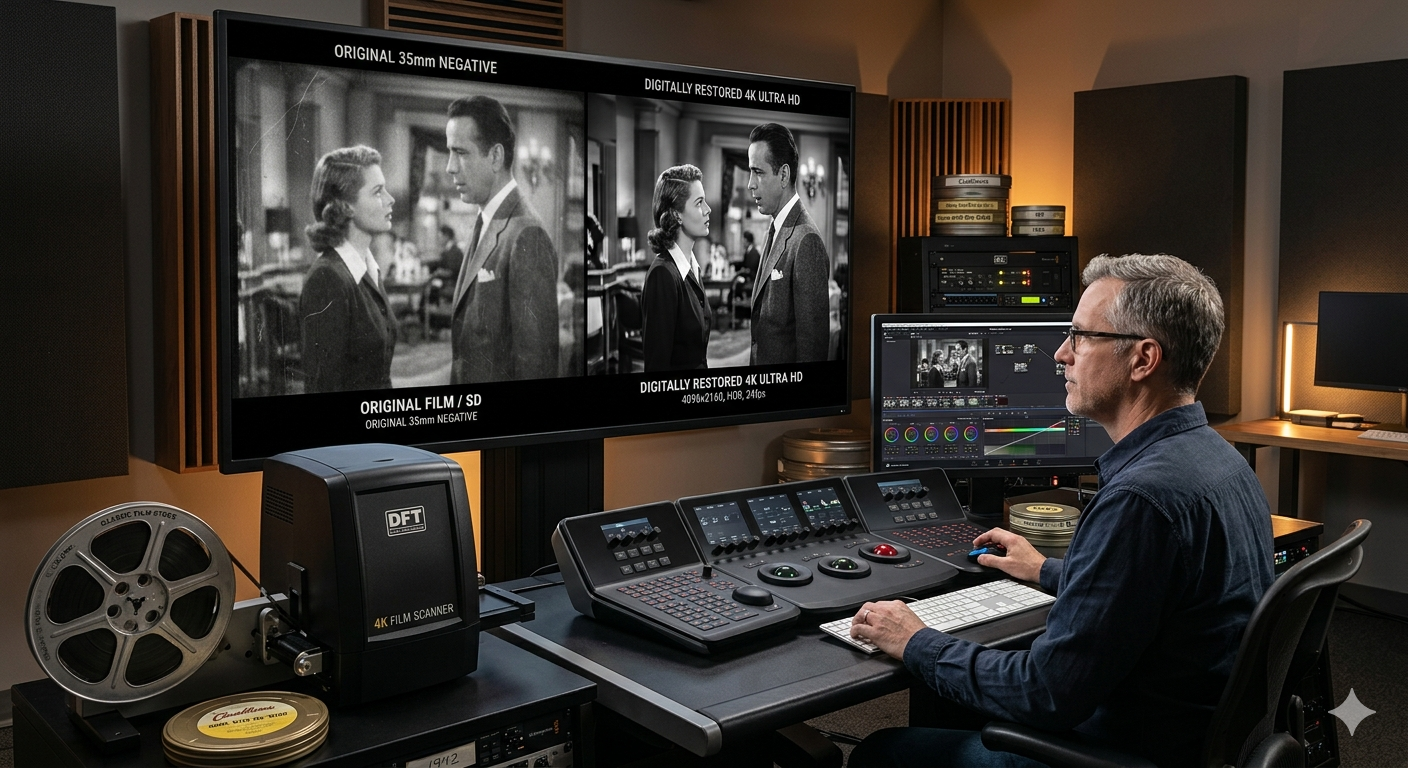
When a classic film receives a 4K Ultra HD Blu-ray release, it’s rarely a simple transfer from an old master. In many cases, the movie is rebuilt from the ground up using modern scanning and restoration techniques.
Epic films like Ben-Hur demonstrate just how complex this process can be. Originally released in 1959 and produced by Metro-Goldwyn-Mayer, the film was shot on large-format 65mm film, meaning it contains enormous detail that modern restoration technology can finally unlock.
But remastering a classic film for 4K can take months or even years, and the costs can reach hundreds of thousands—or even millions—of dollars.
Here’s what actually goes into bringing a decades-old movie into the 4K era.
Step 1: Finding the Best Film Elements
The restoration process begins with a search for the best surviving film materials.
Studios typically maintain several versions of a film’s elements, including:
- Original Camera Negative (OCN) – the best and most detailed source
- Interpositive (IP) – a positive copy used to create negatives
- Internegative (IN) – used to produce theatrical prints
- Separation masters – black-and-white film elements used for color preservation
If the original negative is damaged or incomplete, restoration teams may combine several elements to reconstruct the film.
For major productions like Ben-Hur, studios sometimes have multiple film elements stored in archives around the world.
Locating and inspecting these materials alone can take weeks or months.
Step 2: High-Resolution Film Scanning
Once the best elements are located, the film is scanned frame-by-frame using high-end scanners.
Typical scan resolutions include:
- 4K scans – standard for most UHD restorations
- 6K or 8K scans – common for large-format films
If a movie was shot on 65mm film, restorers often scan the negative at 6K or higher to capture all available detail.
Each frame of the film becomes a high-resolution digital image.
To put that in perspective:
- A 3-hour film contains roughly 260,000 frames
- Each frame can be tens or hundreds of megabytes
That means the raw scan data for a single film can exceed 20–40 terabytes.
Scanning alone can take several weeks, depending on the condition of the film.
Step 3: Digital Restoration
After scanning, the raw images undergo extensive digital cleanup.
Over decades of storage and theatrical use, film can accumulate:
- Dust and dirt
- Scratches
- Torn frames
- Image instability
- Flicker or exposure variations
Restoration artists use specialized software to correct these issues, often frame by frame.
Some automated tools exist today, but large restorations still involve significant manual work.
For a long epic like Ben-Hur, restoration teams may spend thousands of hours cleaning up the film.
Costs at this stage can easily reach:
- $100,000 – $500,000 for complex restorations
- Over $1 million for major archival projects
Organizations such as The Film Foundation often support these efforts to ensure historic films are preserved properly.
Step 4: Color Grading and HDR Mastering
Once the film is restored, it must be color graded.
Colorists work to match the movie’s original theatrical look using references like:
- Vintage film prints
- Studio timing notes
- Cinematographer guidance
- Historical color references
Modern 4K releases are then graded for High Dynamic Range (HDR), which greatly expands brightness and contrast.
Most UHD discs include:
- HDR10
- Dolby Vision
HDR can make a dramatic difference for classic films, especially large-scale productions like Ben-Hur, where desert landscapes, bright skies, and dramatic lighting benefit from expanded dynamic range.
Color grading typically takes several weeks depending on the complexity of the film.
Step 5: Film Grain Management
Film grain is one of the most debated aspects of modern restorations.
Grain is a natural part of film photography, and many cinephiles believe it should be preserved exactly as captured.
Restoration teams must decide how much grain to retain.
Possible approaches include:
- Preserving the grain entirely
- Light grain management to stabilize the image
- Heavy digital noise reduction (DNR)
Excessive DNR can remove fine detail and create a waxy appearance, which is why many modern restorations aim to preserve the natural film texture.
Step 6: Audio Restoration and Remixing
The audio side of a restoration is just as important as the picture.
Engineers locate the original audio sources, which might include:
- Magnetic film tracks
- Dialogue recordings
- Music stems
- Effects tracks
These elements are digitized and cleaned up to remove:
- Tape hiss
- Pops and crackle
- Distortion
Modern releases often include newly created surround mixes such as:
- Dolby Atmos
- DTS-HD Master Audio
These mixes allow classic films to take advantage of modern home theater systems while preserving the original soundtrack.
Step 7: UHD Blu-ray Encoding
Once the final master is complete, it must be compressed for the UHD Blu-ray format.
4K discs typically use:
- HEVC (H.265)
Most UHD Blu-ray discs hold:
- 66 GB (dual-layer) or
- 100 GB (triple-layer) of data
Encoding engineers carefully balance bitrate and compression quality to avoid problems like:
- Banding
- Macroblocking
- Compression artifacts
This stage may involve multiple encoding passes and extensive quality checks.
How Long Does a 4K Restoration Take?
The timeline can vary significantly depending on the film’s condition and the scope of restoration.
Typical timeframes:
| Stage | Estimated Time |
| Film element search | 2–8 weeks |
| Film scanning | 2–4 weeks |
| Digital restoration | 3–6 months |
| Color grading & HDR | 3–6 weeks |
| Audio restoration | 2–4 weeks |
| Disc encoding & QC | 2–3 weeks |
For large projects, the total timeline can reach 6 months to over a year.
Why Some Movies Look Incredible in 4K
Not every film benefits equally from a 4K restoration.
Movies shot on:
- Large-format film
- High-quality 35mm negatives
- Low-grain film stocks
often see the biggest improvement.
Films like Ben-Hur are perfect candidates because 65mm film contains far more detail than standard Blu-ray can display, allowing 4K releases to reveal texture and clarity that audiences have never seen before.
Classic Films That Found New Life in 4K
While restoring a film like Ben-Hur may sound like an extraordinary case, it’s actually part of a broader trend in film preservation. Over the last decade, studios and restoration teams have used modern scanning and digital restoration tools to bring many classic films back to life for the 4K era.
In some cases, these restorations reveal details that audiences have never seen before outside of original theatrical prints. Here are five notable examples where a proper 4K restoration dramatically revitalized a classic film.
1. Lawrence of Arabia
Few films demonstrate the power of large-format restoration better than Lawrence of Arabia. Like Ben-Hur, the film was shot on 65mm Super Panavision, which contains an enormous amount of visual information.
The restoration process involved scanning the original elements at extremely high resolution and rebuilding damaged portions of the film. The project was overseen by renowned film preservationist Robert A. Harris and required years of careful work.
The resulting 4K release reveals stunning desert landscapes, incredibly fine grain structure, and an image that many enthusiasts say comes remarkably close to the experience of seeing a pristine 70mm print.
2. 2001: A Space Odyssey
Stanley Kubrick’s legendary science-fiction epic also benefited from a meticulous restoration led by Warner Bros..
The original camera negative was scanned at high resolution and carefully restored while preserving the film’s original photochemical appearance. The HDR grade allows the film’s deep space blacks and bright highlights to stand out more dramatically on modern displays.
Perhaps most impressive is how the restoration enhances the film’s groundbreaking practical visual effects, which still look remarkably convincing more than five decades later.
3. The Wizard of Oz
Classic Hollywood productions can benefit just as much from modern restoration techniques. The Wizard of Oz was originally filmed using the famous three-strip Technicolor process, which captured vibrant color information across multiple film negatives.
During the restoration process, these negatives were scanned separately and digitally recombined to recreate the film’s original color palette. The result is a presentation with richer colors, improved detail, and greater stability than many earlier home video versions.
The 4K restoration allows modern audiences to appreciate the film’s iconic visual style in a way that closely reflects its original theatrical presentation.
4. Apocalypse Now
Francis Ford Coppola personally supervised a massive restoration project for Apocalypse Now, culminating in the release of Apocalypse Now: Final Cut.
The film was scanned in 6K resolution and underwent extensive color grading to restore its original cinematic look. The project also included a new immersive audio mix in Dolby Atmos, allowing the film’s intense battle scenes and atmospheric jungle environments to fully surround viewers.
The HDR grading significantly enhances the film’s contrast, giving night scenes, explosions, and helicopter attacks far greater depth than earlier home releases.
5. Jaws
Another classic that benefited from modern restoration is Jaws, overseen by director Steven Spielberg and released in 4K by Universal Pictures.
The original camera negative was scanned in 4K and restored with great care taken to preserve the natural film grain. The HDR grading improves the brightness of ocean highlights while maintaining shadow detail in underwater scenes.
The result is widely regarded as one of the finest catalog 4K releases available, demonstrating just how much detail can still be extracted from a well-preserved film negative.
The Real Goal of Film Restoration
While 4K Blu-ray releases are exciting for collectors, the deeper goal of restoration is film preservation.
Every restoration creates new archival masters that ensure classic films survive for future generations.
In that sense, every new 4K release isn’t just an upgrade—it’s a rescue mission for cinema history.
Related Posts